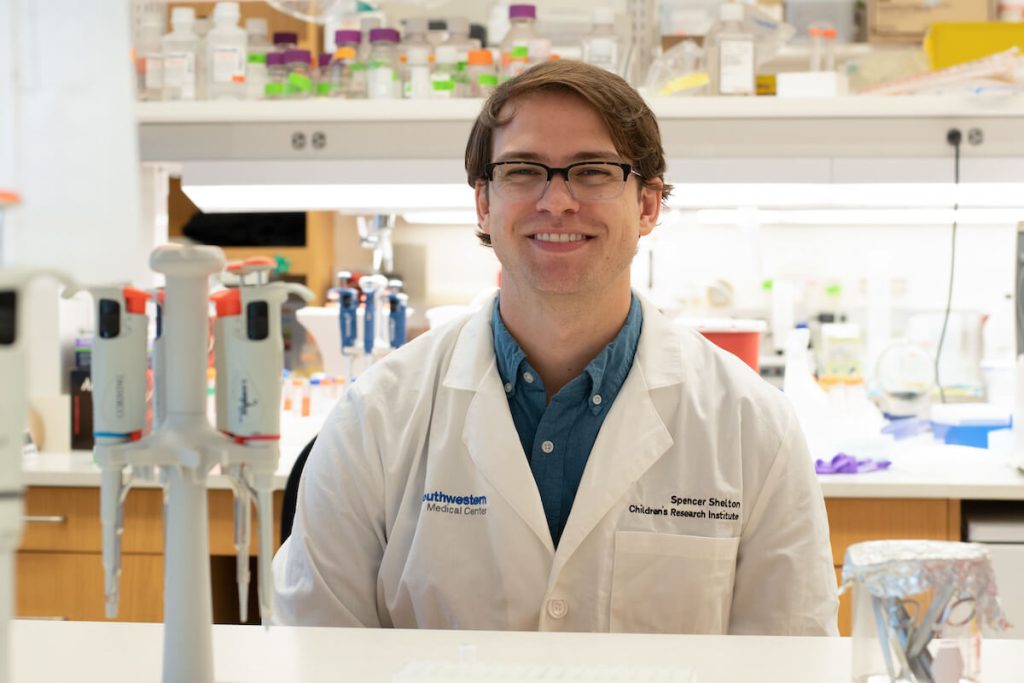
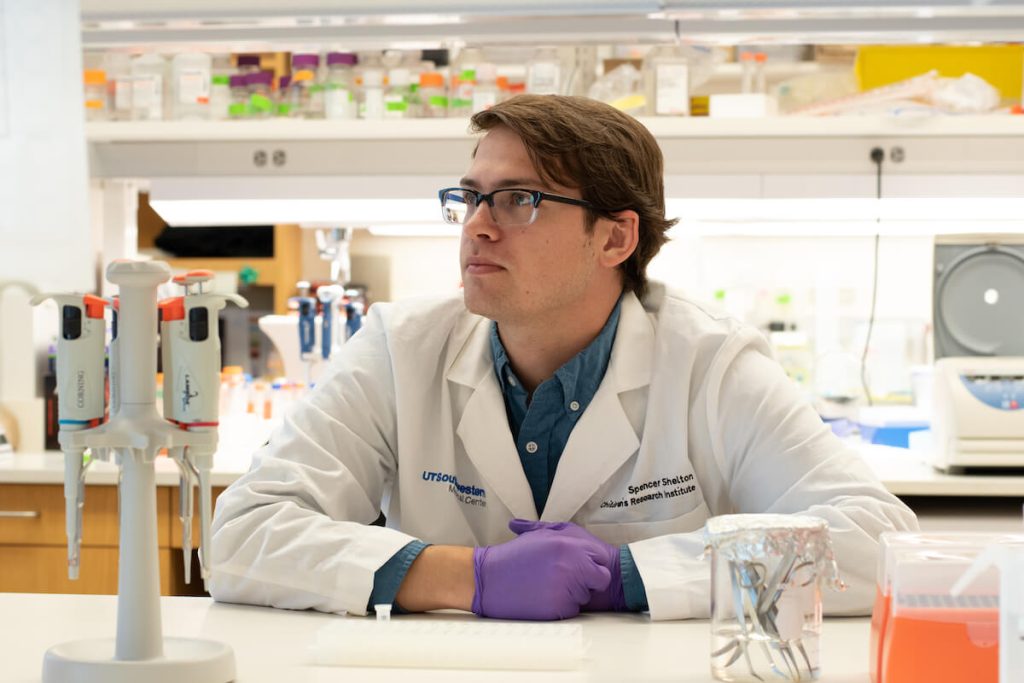
Spencer Shelton is a fourth-year graduate student in the Mishra lab and a National Science Foundation Graduate Research Fellow. He is studying the role of mitochondrial DNA variations in metastatic melanoma.
How did you end up in CRI?
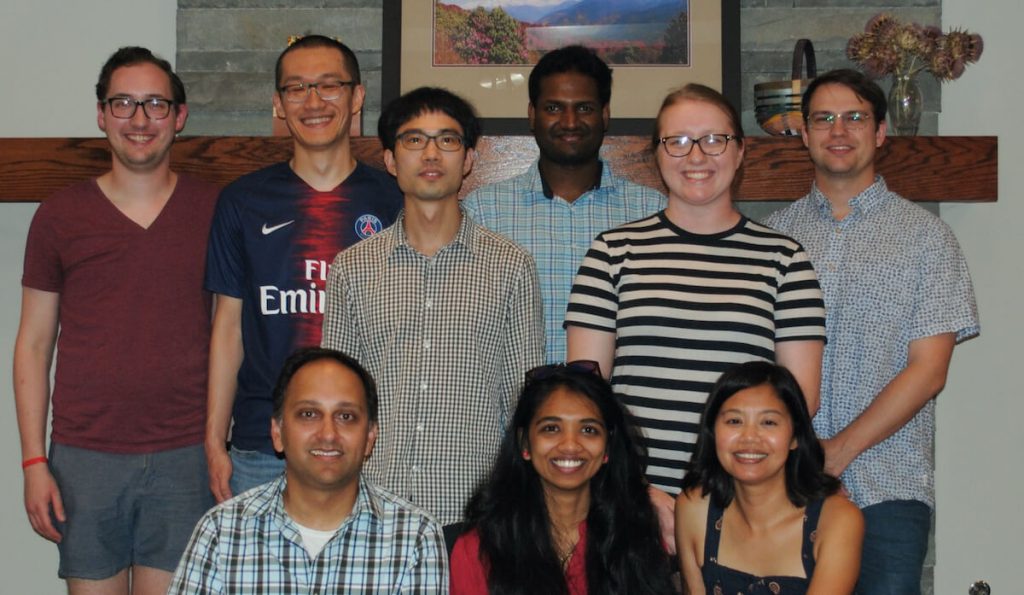
A major reason I joined CRI is because of the collaborative atmosphere present in the department. I often work closely with members of other labs who share their technical expertise to help my project. This has enriched my education and helped me become competent in many new techniques. Further, the melanoma project that I am working on is part of a larger multi-lab initiative—which includes the Morrison, DeBerardinis, and Mishra labs—to investigate the mechanisms governing melanoma progression. This multi-lab melanoma group has bimonthly meetings that lead to productive discussions and experimental suggestions, which have strengthened my scientific thought process.
What are you researching?
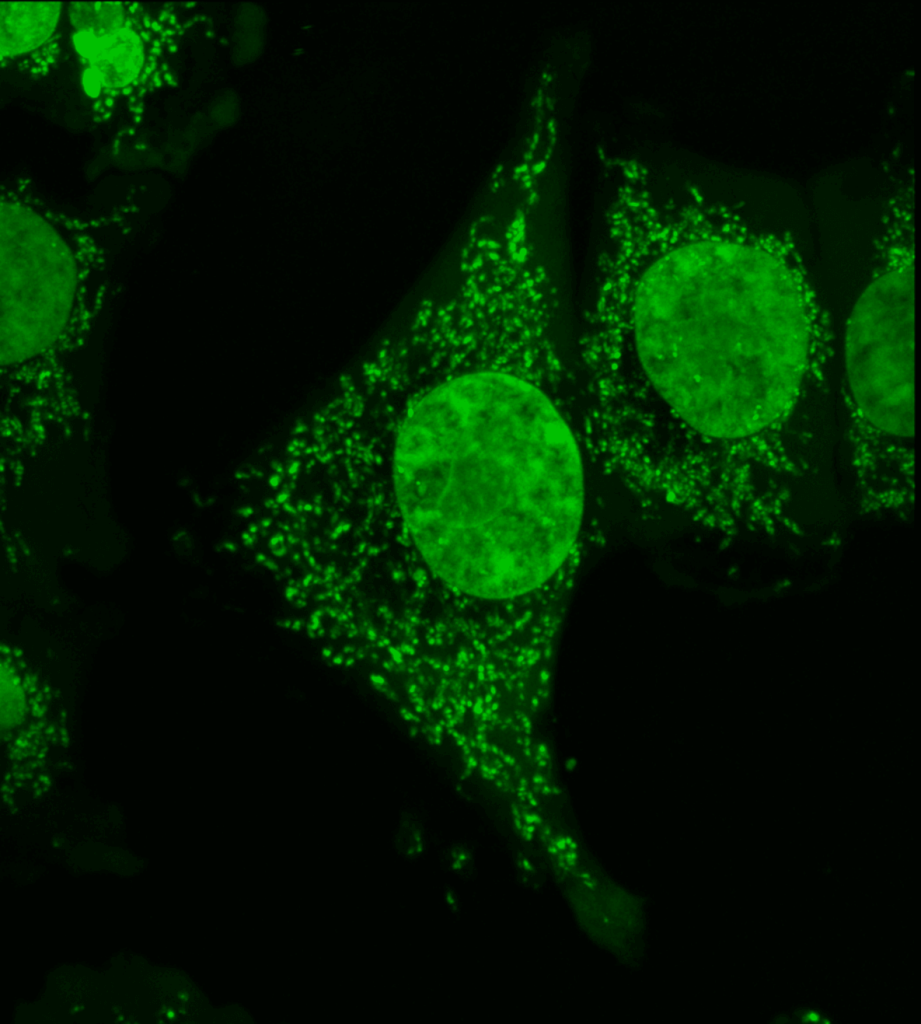
There is a lack of consensus on how dysfunctional mitochondrial energy production impacts the ability of cancer cells to spread to distant organs. This is in part because several of the critical genes involved in mitochondrial energy production are encoded in a small genome localized in the inner mitochondrial space. This unique localization of mitochondrial DNA (known as mtDNA) is different from all other genes found in the nucleus. Large-scale patient studies have shown that a subset of cancer patients have mtDNA mutations uniquely present in cancer cells but not in the surrounding healthy tissue.
My project focuses on the development of new models that can directly study the effects of mtDNA mutations on cancer progression. Collaborating with several labs in the institute, we have found that mtDNA mutations do perform an important role in determining the outcome of melanoma, a type of skin cancer. Currently, I am very excited about experiments testing whether or not melanoma cells that simultaneously harbor mutant mtDNA and healthy mtDNA will select for a specific genome during tumor growth and spreading.
What’s your favorite spot in CRI?
The break rooms in CRI are my favorite spots because of the stimulating conversations about science that take place in them. Also, sometimes free snacks or treats are left out!
What about being a researcher is different than people might expect?
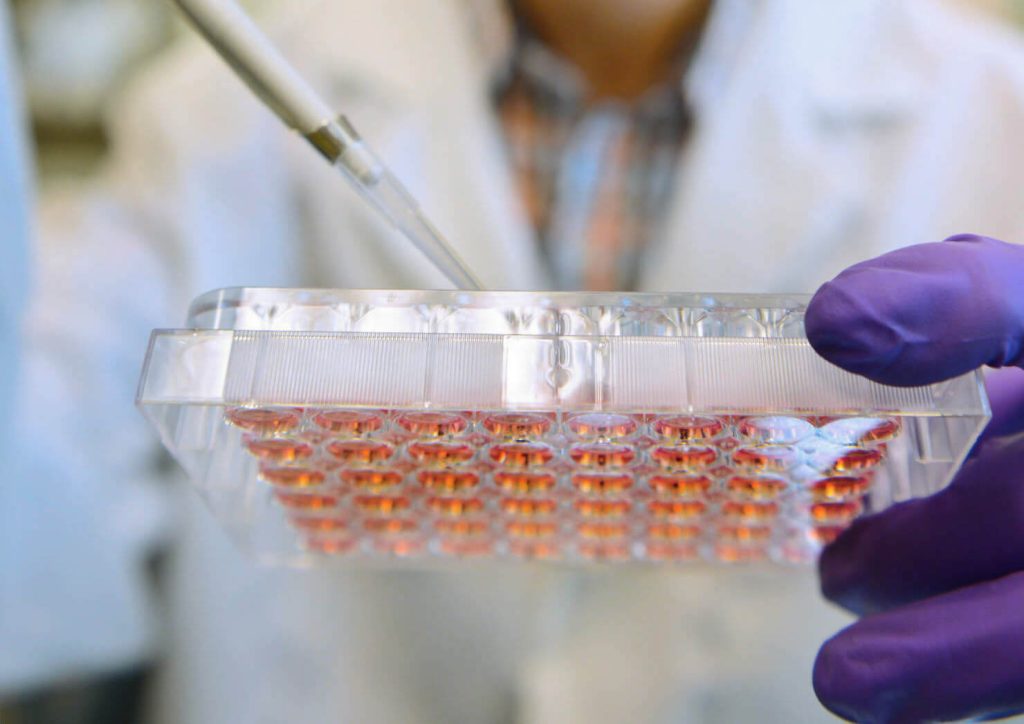
Most people I talk with think that research is a bit more sci-fi than it really is. I often joke that my job is to move around very tiny amounts of liquids in a very specific order.
Do you have any hidden talents?
I have probably the lamest superpower ever: an extremely accurate internal timer for short incubations. For example, if I start a centrifuge for a 10-minute spindown and leave the room, I know, within a few seconds margin, when it will end. This is obviously nice in the lab, but it also has its perks for things at home, like cooking.