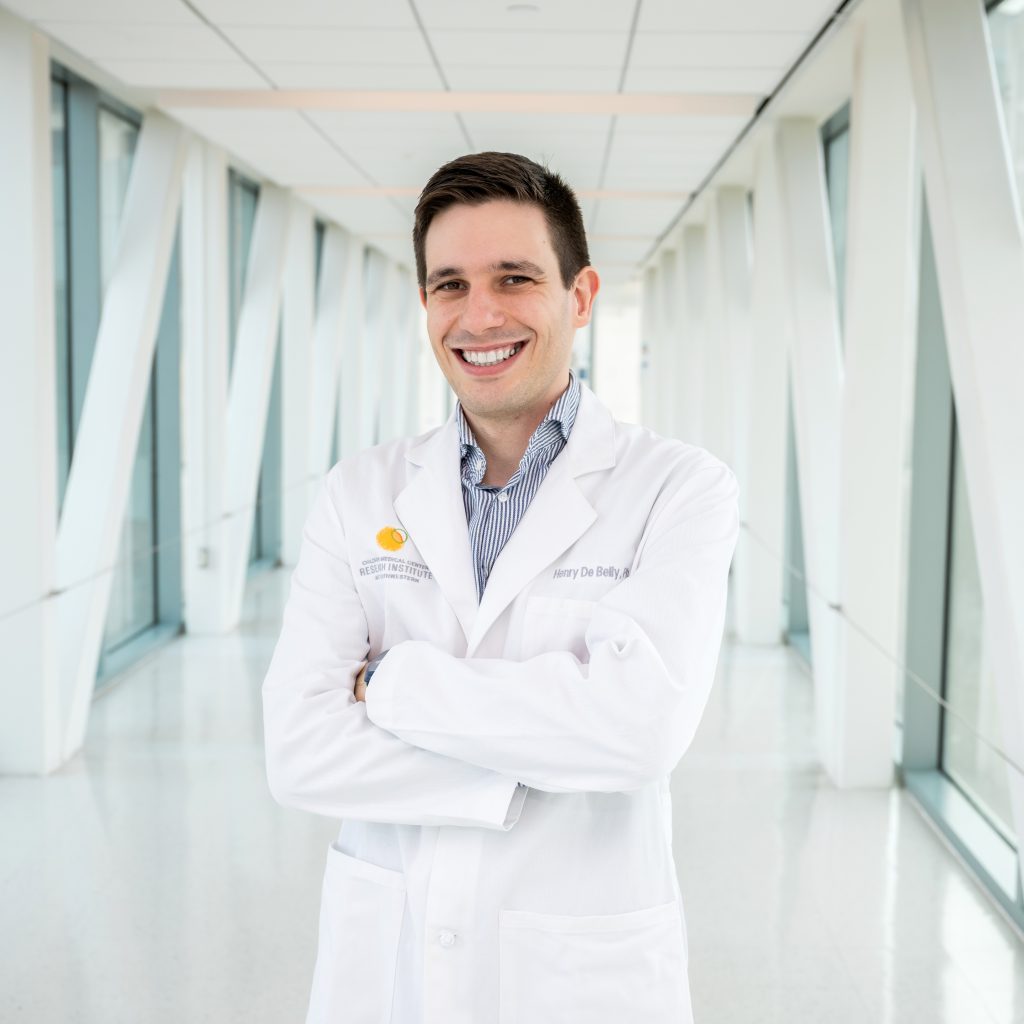
Henry De Belly, Ph.D., the newest CRI faculty member, launched the De Belly Lab in early 2026 and joins the CRI Tissue Regeneration Program. Henry grew up in France and earned a bachelor’s in immunology from Montpellier University, a master’s in biophysics from Université Paris Diderot, and a Ph.D. in stem cell biophysics from University College London, where he demonstrated how membrane mechanics regulates pluripotency and cell fate.
As a postdoctoral fellow at UC San Francisco, he resolved a long-standing controversy regarding membrane tension propagation and uncovered how long-range mechanical signals coordinate cell polarity and migration. At CRI, Dr. De Belly hopes to define the molecular control of membrane fluidity and its consequences for immune and cancer cell functions.
Why did you decide to join CRI?
I was drawn to CRI because of its collaborative and intellectually vibrant environment, combined with its strength at the interface of fundamental biology and translational cancer research. Coming from a mechanistic, basic science background, I was seeking an Institute where deep biological insight serves as a foundation for clinical innovation. CRI research spans from core cell biology to cutting-edge cancer research, and its location within UT Southwestern – one of the leading institutions in lipids and metabolism research – make it a unique scientific ecosystem. I also greatly value how strongly CRI supports scientists at every stage of their careers, from graduate students to new principal investigators, providing exceptional mentorship, resources, and a collaborative environment that fosters scientific independence and long-term success.
Every day, immune cells crawl through your body to keep you safe. Their front (red) and back (blue) polarity programs must stay coordinated as they move. How these two systems talk to each other is still a mystery.
What are you researching?
I study how physical properties of cells influence their behavior. Cells are not only controlled by genes and chemistry, but they are also shaped by mechanical forces. My lab is focused on how cells regulate their outer membrane. Just as a guitar string must be precisely tuned to play the right note, a cell’s membrane must maintain the right tension to coordinate movement, communication, and essential cellular functions.
Scientists know membrane fluidity changes during immune responses and diseases like cancer, but we still don’t understand how cells actively regulate it. My research aims to uncover the molecular mechanisms cells use to maintain and adjust membrane fluidity, with the long-term goal of developing new ways to influence immune function and cancer progression.
How do you expect your work will one day help patients?
A central focus of my research is understanding how cells move. Movement is essential for many biological processes, but it must be tightly controlled. I study two types of cells where movement has major consequences for health: immune cells and cancer cells. Immune cells must move efficiently through tissues to fight infections. If they fail to migrate properly, immune defense is weakened; if they move inappropriately, they can drive autoimmune disease. Cancer presents the opposite problem: healthy cells normally stay in place, but cancer cells acquire the ability to move. Cancer cells invade surrounding tissues and can spread throughout the body, a process called metastasis, which is responsible for most cancer-related deaths. Our goal is to translate a deeper understanding of how cells control their movement into new strategies to control both the immune system and prevent cancer progression.
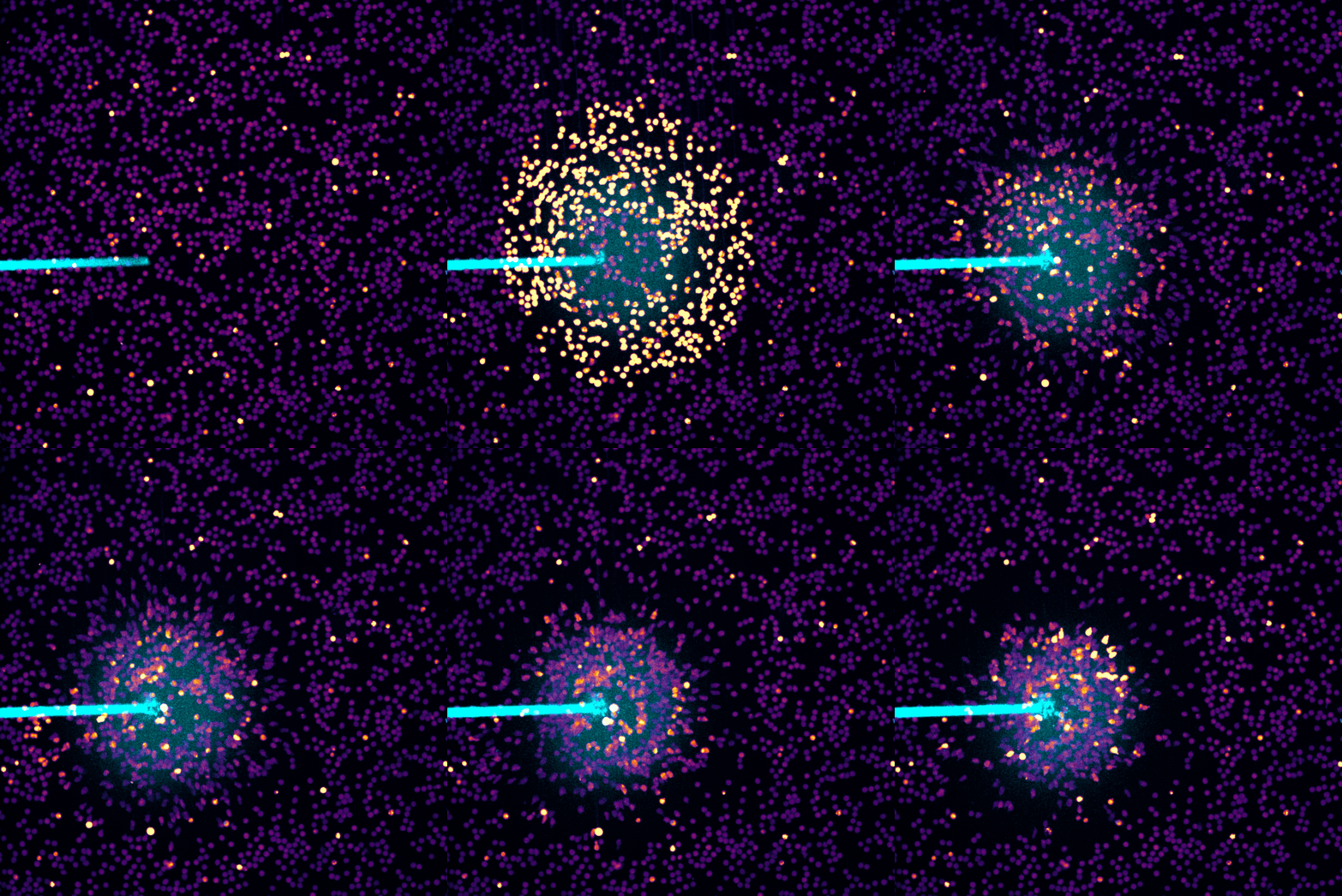
Neutrophils, a type of white blood cells, collectively migrate toward sites of infection during a process called swarming. Shown is a micropipette (blue) releasing a metabolite that triggers swarming in a dish of primary human neutrophils.
What lessons have you learned along the way?
I’ve learned the importance of breaks. My best work is grounded in creativity, and creativity cannot be forced. Stepping away from a problem often creates the mental space I need for new ideas to emerge. Some of my clearest insights have come when I stopped actively trying to solve a problem.
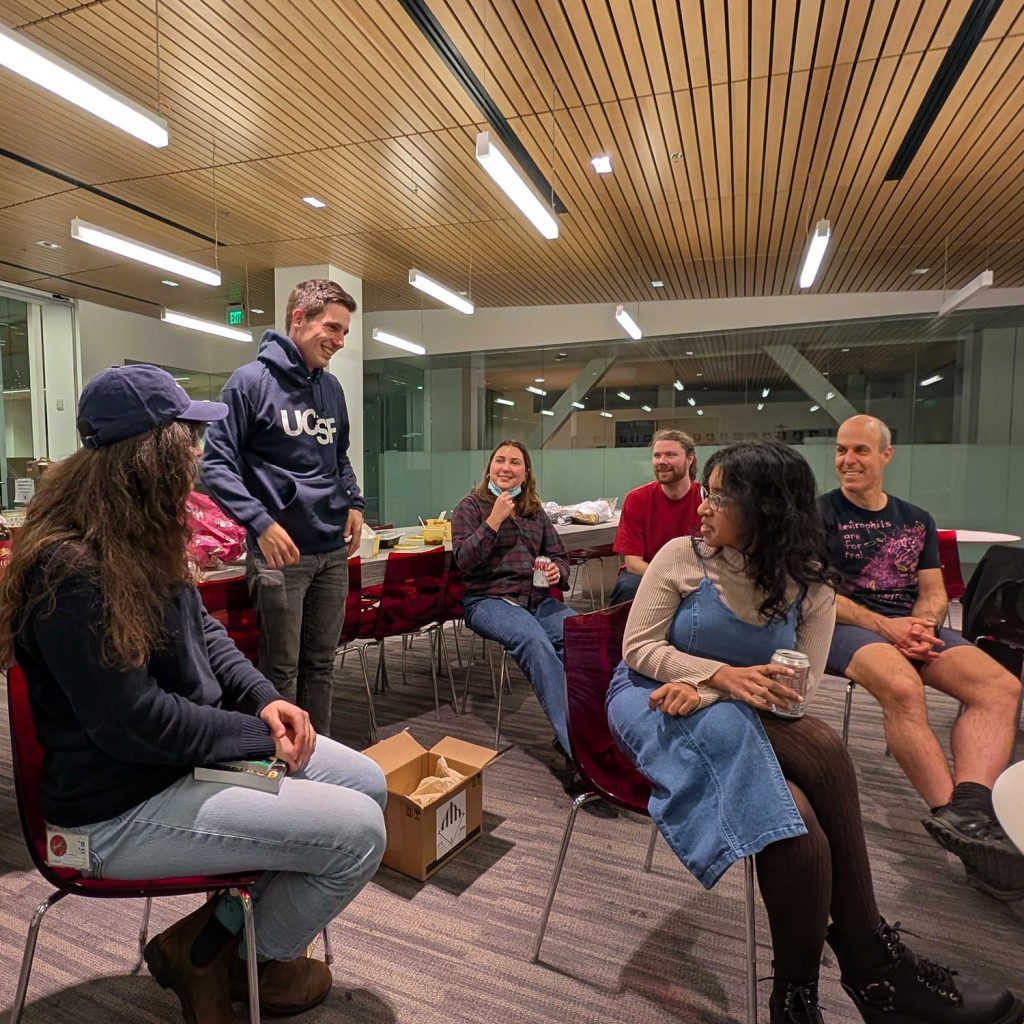
Science is hard. By definition, we are trying to do things that have never been done before, so failure is inevitable. Even though we know setbacks are part of the process, they are still difficult because we care so deeply about answers to the questions we pursue. What has helped me most is surrounding myself with the right people. Science is a collective endeavor. One of the greatest privileges of this career is working alongside passionate, creative, and diverse colleagues who push me to think differently and bring fresh perspective and moral support.
What do you like to do when you’re not in the lab?
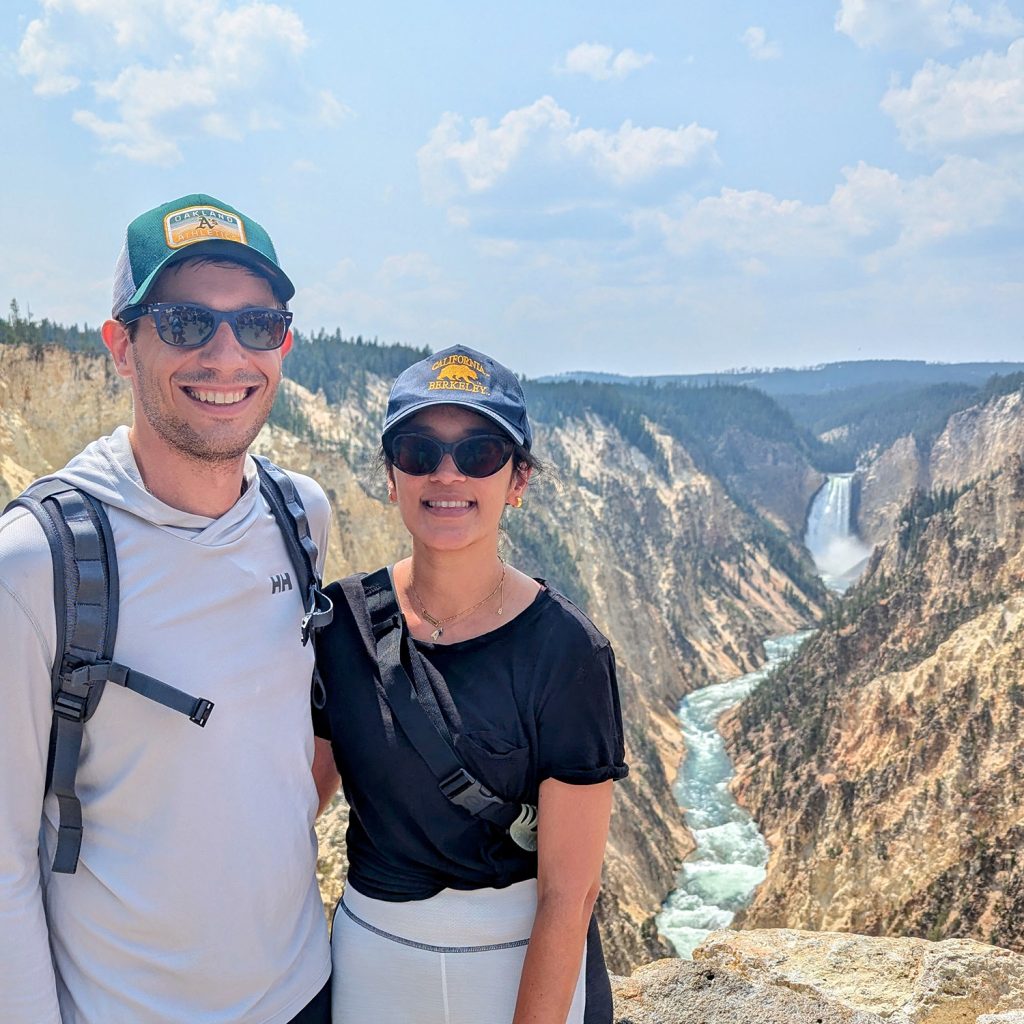
I like spending time outdoors. I enjoy long walks and riding my bike. Being in nature helps me reset and think more clearly. One of my personal goals is to visit all the U.S. National Parks. I have seen 13 so far, and here I am at the Grand Canyon of the Yellowstone.
At home, I love spending time with my partner and our cat, Venus. I enjoy reading, playing guitar, and unwinding with some homecooked food. We also love to explore new neighborhoods, discover great restaurants, and find hidden gems. Since we just moved here, I’m especially excited to explore Dallas and Texas, more broadly.